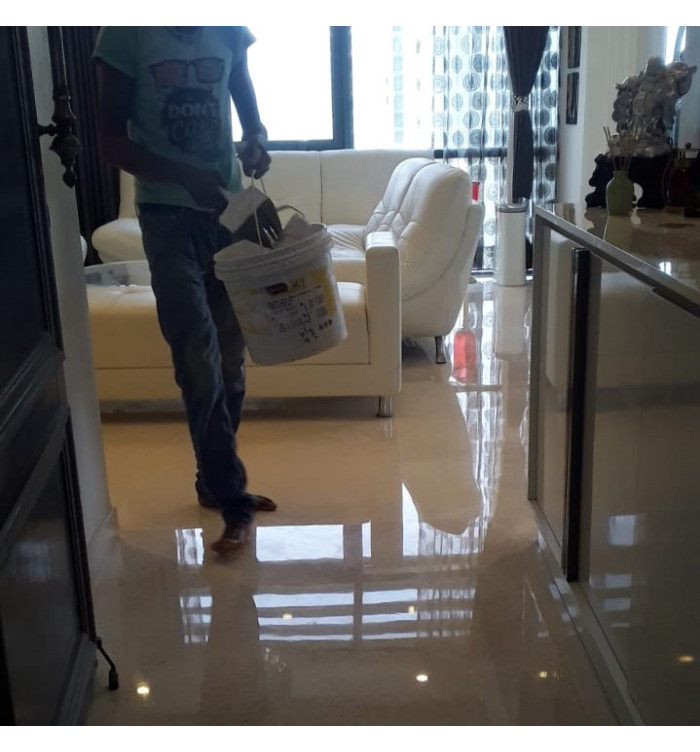
Marble Floor Polishing In Doctors Appartment-Delhi
Restoring marble floors with care, precision, and practical experience
Marble flooring is a common feature in residential apartments across Delhi because of its natural appearance, durability, and cooling effect. When first installed, the surface looks smooth, bright, and evenly reflective. It enhances natural light and gives the entire home a clean, organised feel. Over time though, everyday use slowly affects the finish. Foot traffic, dust, spills, and regular cleaning gradually wear down the surface layer. The marble begins to look dull, scratched, and uneven.
In apartment complexes such as Doctors Apartment, I often see marble floors that are structurally strong but have lost their natural shine. In most situations, replacement is not necessary. Proper grinding and polishing can restore the existing marble and bring back its smoothness and clarity. This approach avoids demolition, reduces cost, and keeps disruption to a minimum.
The goal is always to restore the stone itself, not to hide defects with temporary shine products.
What professional marble polishing actually does
There is a common misunderstanding that polishing means applying wax or a glossy chemical. These treatments may give a short-lived shine, but they wear off quickly and can make the floor slippery.
Professional marble polishing is a mechanical correction process.
Over time, the upper layer of marble develops fine scratches, etching, and uneven patches. These small imperfections scatter light, making the floor appear flat or cloudy. Using industrial diamond abrasives, we carefully remove a thin layer from the surface. This levels the marble and exposes fresh stone underneath. Once smooth again, the marble naturally reflects light and regains its shine.
The finish comes from the stone itself, not from any artificial coating.
Common issues seen in apartment marble floors
From regular site work in residential buildings, certain problems appear repeatedly. These are normal signs of wear and can usually be corrected.
Dull and faded finish
The floor looks lifeless even after cleaning.
Fine scratches and scuff marks
Daily foot traffic and dust create small lines that reduce shine.
Stains and discolouration
Tea, oil, food, and coloured liquids seep into the pores and leave marks.
Uneven shine
High-traffic areas look flat while corners still retain some gloss.
Water and moisture marks
Bathrooms and kitchen areas often show dull spots or rings.
Pinholes and small cracks
Natural marble sometimes develops tiny holes that trap dirt.
These issues develop gradually, but with proper polishing, the surface can be restored effectively.
Why polishing is better than replacing the marble
When marble starts looking old, many homeowners consider replacing the tiles entirely. However, replacement involves heavy dust, noise, and significant disruption inside the apartment. Matching the same marble shade and pattern can also be difficult.
Polishing is usually the smarter option.
It keeps your existing marble intact while improving its appearance and strength. The process is faster, cleaner, and more cost-effective than replacing the flooring. In most apartments, restoration delivers results that look close to newly installed marble.
From both a practical and financial perspective, polishing offers better long-term value.
Professional methods used during restoration
Each marble floor has its own condition and wear pattern, so the approach is adjusted accordingly. Still, some proven techniques form the foundation of professional marble polishing.
Diamond grinding and honing
This is the main correction stage.
Diamond pads of different grits are used step by step. Coarse pads remove deeper scratches and unevenness. Finer pads gradually smooth the surface and develop the natural shine.
This ensures the floor becomes flat and uniform.
Epoxy filling for pinholes and cracks
Small holes and cracks are filled using colour-matched epoxy resin. This prevents dirt collection and improves appearance.
Once cured, the filled areas are levelled and polished to blend naturally with the surrounding marble.
Silicate hardening treatment
Marble is softer compared to many stones. A silicate hardener penetrates the surface and strengthens it internally.
This increases durability and helps the polish last longer under regular use.
Nano coating and surface sealing
After polishing, a breathable sealer or nano coating is applied. This reduces water absorption and protects against everyday stains.
It preserves the natural look and feel of the marble.
Step-by-step work process
A structured and organised approach ensures quality results and minimal disturbance.
Inspection
The marble type and condition are carefully assessed. Scratches, stains, and damaged areas are identified.
Preparation
Furniture is moved safely. Walls, skirting, and nearby fittings are covered for protection.
Deep cleaning
The floor is thoroughly cleaned to remove dirt, grease, and residues.
Grinding and correction
Diamond grinding removes scratches, stains, and uneven spots. Edges and corners are treated separately for a consistent finish.
Honing and polishing
Finer abrasives gradually refine the marble until the desired finish is achieved.
Repairs and strengthening
Pinholes are filled and hardener treatment is applied to improve durability.
Sealing and finishing
A protective sealer is applied, followed by light buffing.
Final clean-up
All slurry and residue are removed, leaving the apartment clean and ready for use.
Clean and safe execution inside apartments
Since polishing is carried out in lived-in spaces, cleanliness and safety are essential.
Wet grinding reduces dust significantly. Professional vacuums collect slurry immediately. Cables are arranged safely to avoid hazards. Furniture and fittings are handled carefully.
The aim is to complete the work neatly with minimal inconvenience to residents.
Suitable areas for marble polishing
This service works well in both residential and small commercial spaces.
Residential
-
Living rooms
-
Bedrooms
-
Dining areas
-
Kitchens
-
Corridors
-
Staircases
-
Bathrooms
Light commercial
-
Small clinics
-
Offices
-
Reception areas
-
Studio spaces
In all these areas, a smooth marble floor improves appearance and makes cleaning easier.
Long-term durability and easy maintenance
After polishing and sealing, marble becomes easier to maintain.
The smooth surface prevents dirt from settling deeply. Regular mopping keeps it clean. Hardening treatment reduces wear, and sealing helps prevent stains.
With proper care, the finish can last several years.
Simple maintenance tips:
-
Use entrance mats
-
Avoid harsh or acidic cleaners
-
Wipe spills quickly
-
Use soft pads under furniture
-
Clean with mild solutions
These habits protect the marble and maintain its shine.
What you can expect after polishing
Once the work is completed, the difference is noticeable.
Rooms appear brighter as light reflects evenly. The marble’s natural patterns look clearer and richer. The floor feels smooth and comfortable underfoot. Cleaning becomes easier and quicker.
Instead of looking worn or patchy, the marble appears refreshed and well maintained.
Most homeowners are surprised by how much improvement is possible without replacing a single tile.
A practical, experience-based service
Marble restoration is skilled work that requires patience and correct technique. Rushing often leads to uneven results. A steady, careful approach always gives better and longer-lasting outcomes.
My focus is on proper correction, clean work, and durable results that stand up to daily use. Each floor is treated individually according to its condition.
If your marble has lost its shine or shows visible wear, professional polishing is usually the most sensible and cost-effective solution.

Amrapali Greens- Ghaziabad

Meghdutam Apartment - Noida

Noida Sector 59

NEC Technologies

GREATER KAILASH- DELHI

Haldor Topsoe India Private Ltd- Faridabad

Unayur Marketing - Delhi

Heritage Max - Gurgaon

Alliance Constructions- Gurgaon


FREE INSPECTION

BOOKING

WORK STARTED

BEST QUALITY SERVICE

GUARANTEED SATISFACTION